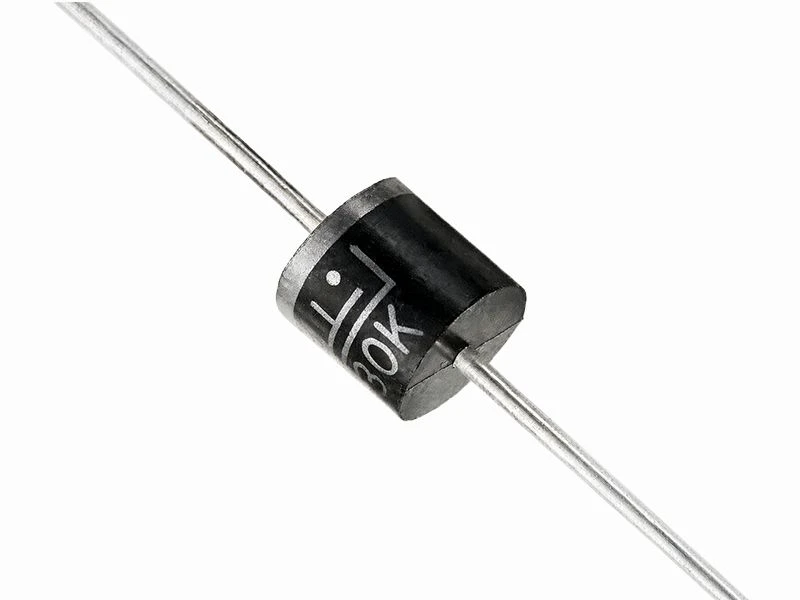
1. Maximum Forward Voltage (VF)
This parameter refers to the voltage drop across a diode when it is in a forward-conducting state. When selecting a diode, ensure that its VF value does not exceed the maximum voltage permitted by the circuit.
2. Maximum Reverse Voltage (VR)
Also known as the reverse breakdown voltage, this represents the maximum reverse voltage a diode can withstand. When selecting a diode, you must ensure that the reverse voltage in the circuit does not exceed the diode's VR rating.
3. Maximum Forward Current (IF)
This parameter specifies the maximum forward current that is allowed to flow through the diode. When selecting a diode, ensure that the forward current in the circuit does not exceed the diode's IF limit.
4. Reverse Leakage Current (IR)
When a diode is in a reverse-biased state, a tiny amount of current may flow through it. A lower IR value indicates superior diode performance.
5. Recovery Time (Trr)
For applications requiring rapid switching, recovery time is a critical metric. It defines the time required for the current to drop to a specific value after the diode switches from a forward-biased state to a reverse-biased state. A shorter recovery time indicates faster switching speed.
6. Temperature Coefficient
Temperature has a significant impact on a diode's performance. When selecting a diode, prioritize those with a lower temperature coefficient to ensure stable performance across various temperature environments.
7. Package Type
Choose an appropriate package type based on specific application requirements. Common package types include through-hole and surface-mount (SMD) packages.
8. Price and Reliability
Beyond meeting performance requirements, consider both the price and reliability of the diode. It is advisable to prioritize products that offer a good balance of cost-effectiveness and consistent quality.