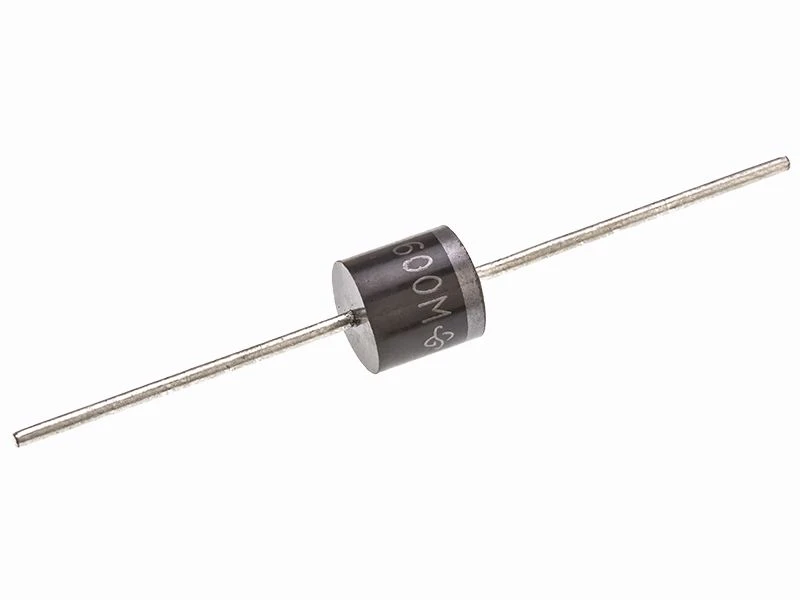
The core structure of a general-purpose diode is a P-N junction, formed by the intimate contact between a P-type semiconductor and an N-type semiconductor. Within this structure, holes and electrons diffuse into one another, creating a space-charge region known as the depletion layer. Additionally, the diode features two electrodes-the anode (positive terminal) and the cathode (negative terminal)-which extend from the P-region and N-region, respectively. For ease of installation and use, diodes are typically encapsulated within a plastic or metal housing.
Enclosing the finished diode in a suitable protective material serves to shield it from external environmental factors and ensures the stability of its performance.