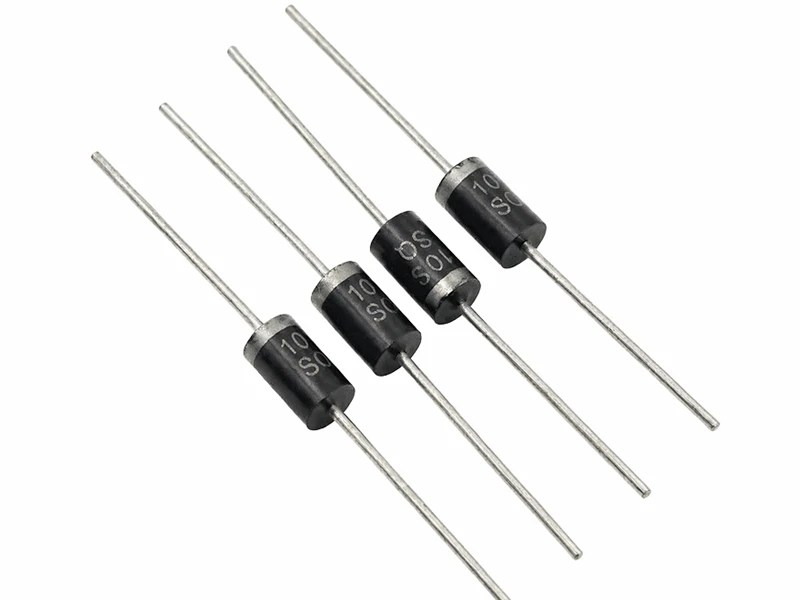
1. Select the appropriate type of diode
Choose the right type of diode based on specific application requirements-for instance, deciding between silicon and germanium diodes, or selecting the correct polarity (NPN vs. PNP, in the context of related semiconductor components).
2. Thoroughly understand the diode's fundamental parameters
When designing or using a diode, you must have a comprehensive understanding of its key parameters to ensure it meets the circuit's performance requirements.
3. Ensure correct diode polarity
Because diodes exhibit unidirectional conductivity, it is essential to connect the positive and negative terminals correctly to prevent damage caused by reverse connection.
4. Control input signal parameters
When a diode is used as a switch, the amplitude and frequency of the input signal must be strictly controlled to ensure they remain within rated limits, thereby guaranteeing proper operation.
5. Address heat dissipation
In high-power applications, diodes can generate significant heat. Appropriate thermal management measures-such as adding heat sinks or using cooling fans-must be implemented to ensure stable operation.
6. Prevent electrostatic damage
Static electricity can cause severe damage to diodes. During handling and installation, proper anti-static precautions must be taken to ensure the safety of the components.
7. Consider circuit isolation
In certain applications, it may be necessary to isolate the diode from other parts of the circuit to minimize interference and noise.
8. Adhere to industry standards and specifications
Throughout the design and application process, strictly follow relevant electronic engineering standards and specifications to ensure the safety and reliability of the product.